Not what you were looking for? Try Google Search:

Canada's Most Wanted

People get too excited about IPO's (Initial Public Offering) because of the overly-optimistic outlook painted by analysts, mutual fund managers and investment advisors. This is usually nothing but hype. As a result, the shares of an IPO company have a spectacular performance on the first day of trading. An IPO is a corporation's first offering of stock to the public. Thus, the popular term "going public" refers to an IPO of a corporation.

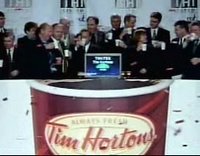
A recent example was the much anticipated and most wanted Tim Hortons Inc. IPO on the Toronto Stock Exchange on March 24th, 2006. There was even a big party at the Toronto Stock Exchange to celebrate the going public of a Canadian icon. The IPO was richly priced at C$27.00, and when trading opened at 09:30, the shares shot up to almost $38.00 (+40%) and closed the day at $33.10 for a gain of over 22%. The 22% "gain" was reported nation wide in television news, the radio and newspapers.

But wait, would an "average investor" have made any money from this IPO? The answer is sadly... no. In fact, an average investor would have lost money in this IPO!

Most people do not think about this but normally only mutual funds and some high net-worth investors (also known as "sophisticated investors" - i.e. those who have at least $500,000 to invest in an IPO) are actually able to purchase shares at the IPO price - i.e. in the primary market.

So, it would have been almost impossible for an average investor to purchase Tim Hortons' shares at the IPO price of $27.00. An average investor would have had to purchase shares once they started trading on the stock exchange - i.e. in the secondary market.

If the shares were purchased when trading opened on the first day at $37.99, at the end of the day the investor would have lost 29% of the principal! In fact, shares purchased at almost any time on the first day would have resulted in a loss by the end of the day.
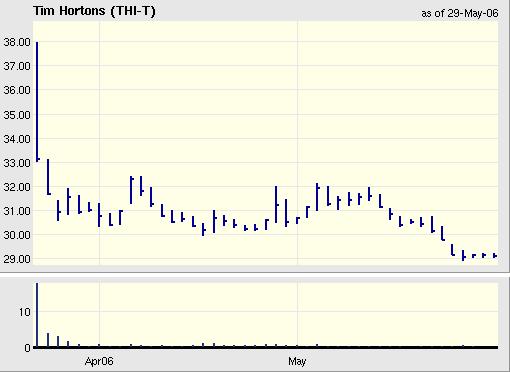
Here's a high-low-close chart of Tim Hortons since it's debut in late March 2006. Notice how the shares having been treading lower since the debut getting closer and closer to the IPO price of $27.00.

There are two good reasons why one should stay away from IPO's:

1. New issues have special salesmanship behind them, which calls therefore for a special degree of sales resistance.

2. Most new issues are sold under "favourable market conditions" - which means favourable for the seller and consequently less favourable for the buyer.

For every IPO that makes money for the investors in the first year of trading, there are ten that lose money for their investors.

Often, it is best to wait for the excitement and optimism to fade away to make purchases of new public companies.

Lets Be Friends

Watch out for fraudulent letters such as these that are all too common these days. I've received several such letters and this is one of them. Notice how the word "Friend" is spelled!

--------------------------------------------------------

FROM THE DESK OF DR. RAMADAN ABDU
BILL AND EXCHANGE MANAGER,
AFRICAN DEVELOPMENT BANK
OUAGADOUGOU, BURKINA FASO.
TEL:00226-78-81-04-32
Alternative e-mail:rama1abdu@yahoo.com

Dear Firend,

I know that this letter may come to you as a surprise but due to the urgency of this transaction.

First I must solicit your confidence in this transaction, this is by virtue of it's nature as being utterly confidential and top secret. Though I know that a transaction of this magnitude will make any one apprehensive and worried, but I am assuring you that all will be well at the end of the day. There is no doubt that trust conceptually is a conundrum which leads itself to deferring interpretation, we have decided to contact you due to the urgency of this transaction.

I am the manager of bill and exchange at the foreign remittance department of African Development bank (ADB). I came to know you in my private search for a reliable and reputable person to handle this Confidential Transaction, which involves the transfer of a huge sum of money to a foreign account requiring maximum confidence.

I am writing to you, following the impressive information received about you from the chambers of commerce. I believed that you are capable and reliable to champion this business opportunity. In my department we discovered an abandoned sum of $30m US dollars (Thirty million US dollars). In an account that belongs to one of our foreign customer who died along with his entire family On Monday, 31 July, 2000, 13:22 GMT 14:22 UK, 2000 through concorde air lane with flight N?AF4590 crashed off, killing all 109 people on board and you can view the site for more details:
news.bbc.co.uk/1/hi/world/europe/859479.stm

Since we got information about his death, we have been expecting his next of kin to come over and claim his money because we cannot release it unless somebody applies for it as next of kin or relation to the deceased as indicated in our banking guidelines but unfortunately we learnt that all his supposed next of kin or relation died alongside with him at the plane crash leaving nobody behind for the claim. It is therefore upon this discovery that I and other officials in my department now decided to make this business proposal to you and release the money to you as the next of kin or relation to the deceased for safety and subsequent disbursement since nobody is coming for it and we don't want this money to go into the Bank treasury as unclaimed Bill.

The Banking law and guideline here stipulates that if such money remained unclaimed after ten years, the money will be transferred into the Bank treasury as unclaimed fund. The request of foreigner as next of kin in this business is occasioned by the fact that the customer was a foreigner and a Burkinabe cannot stand as next of kin to a foreigner.

We agree that 30% of this money will be for you as foreign partner, in respect to the provision of a foreign account, 10 % will be set aside for expenses incurred during the business and 60 % would be for me and my colleagues. There after I and my colleagues will visit your country for disbursement according to the percentages indicated.

Therefore to enable the immediate transfer of this fund to you as arranged, you must apply first to the bank as relations or next of kin of the deceased indicating your bank name, your bank account number, your private telephone and fax number for easy and effective communication and location where in the money will be remitted.

Upon receipt of your reply, I will send to you by fax or email the text of the application. I will not fail to bring to your notice that this transaction is hitch free and that you should not entertain any atom of fear as all required arrangements have been made for the transfer.

You should contact me immediately as soon as you receive this letter.

Trusting to hear from you immediately.

Yours faithfully,

Dr. ramadan abdu,
Bill and exchange manager,
African Development bank ADB

Price of Car In U.S. Vs. Canada

Canadian automobile buyers are getting ripped off (and they probably don't even realize it). Most people will agree that, for example, a 2006 Acura TSX purchased in Canada should cost approximately the same in the United States after taking into consideration things like the currency exchange rate.

In Canada:
The manufacturer's suggested retail price for a 2006 Acura TSX Automatic Transmission is C$37,200.00.

In United States:
The manufacturer's suggested retail price for a 2006 Acura TSX Automatic Transmission is U$27,890.00.

Currency Exchange Rate Used by Automobile Dealers:
CND $1.00 = USD $0.750

Actual Rate as at 14:00 on Wednesday, May 17th, 2006:
CND $1.00 = USD $0.898

The exchange rate used by automobile dealers is no where close to the the actual exchange rate! The case is similar for other automobiles also.

If the actual exchange rate is used, then the cost of the automobile mentioned above, in Canada would only be C$31,058.00. So the differential of C$6142.00 is pocketed by Canadian automobile dealers as extra profit.

As long as Canadians don't voice their concerns, they will continue to be ripped off ...

CFA Vs. MBA, Which Is Best For You? (Part 5/5)


CFA Vs. MBA, Which Is Best For You? (Part 4/5)


CFA Vs. MBA, Which Is Best For You? (Part 3/5)


CFA Vs. MBA, Which Is Best For You? (Part 2/5)


CFA Vs. MBA, Which Is Best For You?

The following is an article by Chad Sandstedt (published December 2004).

It's a question asked by nearly every aspiring finance professional at one time or another -- is my time (and money) best spent pursuing the Chartered Financial Analyst designation or a Masters in Business Administration? There's no question that both are valuable credentials, each are capable of delivering higher salaries and better advancement prospects. However, the answer to this question depends on many factors, including your professional goals, background and resources, both in terms of time and money.

What do you want to be when you grow up?

One obvious difference between the CFA program and an MBA program is the breadth of the curriculum. A good analogy is that the curriculum of the CFA program is a foot wide and a mile deep while the curriculum of MBA programs are a mile wide and a foot deep.

If you plan on working in finance, the CFA program will provide a wealth of knowledge. However, if your career path veers out of finance, the chances that you'll be able to utilize the curriculum are limited. In contrast, an MBA program is likely to provide exposure across numerous fields of study that can be applied in almost any position, whether in finance or not. As such, potential CFA candidates are advised to step back and assess their commitment to a career in finance.

For those who are working in another field and view the CFA program as a way to break into a finance career, it may be more appropriate to first obtain a position in the field, even if it's at an entry level, to assess your commitment to a finance career before beginning the CFA program.


What's the Price of Admission?

One of the most popular motivations for enrolling in the CFA program or an MBA program is to create new career opportunities. Today, many finance jobs require either a CFA designation or an MBA. What's the cost to become qualified for these positions? While there are no exact numbers for either the CFA program or an MBA program, we can make a few assumptions that will apply to many aspiring professionals.

First, let's look at the cost of the CFA program. Our first assumption is that it takes, on average, four exams to complete all three levels of the CFA program. Enrollment and registration fees for four exams will cost $1,815 with early registration. The cost of preparation materials can vary widely between CFA candidates. At the low end of the price range is the purchase of study notes and textbooks. Realistically, many candidates require additional preparation such as study seminars, software, online programs, audio programs, video programs or flashcards. The cost of such a comprehensive study plan could be an additional $2,000 per year. Given our relatively aggressive assumption that all three exams will be successfully completed in four attempts, we will assume a fairly aggressive study plan with $1,000 of study material per year, for a total of $4,000 over four years. Therefore, the total cost of obtaining the CFA designation, including registration fees and test preparation materials, would be $5,815.

The cost of an MBA can range dramatically, from a part-time program at a state university to a full-time program at an Ivy League school, the costs may range from $20,000 on the low end to over $100,000 on the high end.

In summary, the cost of obtaining an MBA will range from four to twenty times the cost of the CFA program.


What's Your Time Horizon?

In the previous section we listed an assumption that it will take the average CFA candidate four exams to complete all three levels of the CFA program. Up until December 2003, all three levels of the CFA exam were administered just once per year. In December 2003, the Level I CFA exam was available to be taken twice per year. If a CFA candidate takes the Level I exam in December, the Level II exam the following June, and the Level III exam one year later, it would take approximately two years if you assume that studying for the Level I exam begins in June. While this is certainly an achievable task and there are people who accomplish this, it's becoming very difficult to do with lower pass rates and more demanding careers that allow less study time to prepare for each exam. Since we assume it will take four attempts to pass all three levels of the CFA program, we will assume these four exams will be completed in three years.

In contrast, most full-time MBA programs can be completed in two years. This is perhaps the biggest advantage of pursuing an MBA compared to the CFA designation, because it's likely to qualify you for a better paying job about a year earlier than the CFA program will. If you're able to increase your compensation by $30,000 with an MBA, you will be making $30,000 more than you will be making in the CFA program for an entire year.

I've developed a spreadsheet that computes the net present value of both the CFA program and an MBA program. For illustration, here's a hypothetical scenario with the following assumptions:

Current Salary: $60,000
Cost of Capital: 5%

Time to Complete CFA Program: 3 Years
Annual Cost of CFA Program: $1,938
Projected Salary Post-CFA Program: $100,000

Time to Complete MBA Program: 2 Years
Annual Cost of MBA Program: $35,000
Projected Salary Post-MBA Program: $100,000

Based on these assumptions, the Net Present Value ("NPV") of the CFA program is $204,394 while the NPV of the MBA program is $177,884. This means that, based on these assumptions, the CFA program is a better investment than an MBA program. However, a change in assumptions can change the answer. If you expect an MBA to deliver a higher salary than you expect after attaining your CFA charter, the answer may be very different. We've made this spreadsheet available so that you can use your own assumptions and see what alternative has the most value for you. To download the spreadsheet file containing this analysis, click here.  For more information, click on the links below:


Self- Study vs. The Classroom?

Perhaps the biggest difference between the CFA program and an MBA is the learning format. The CFA exam is essentially a self-study program that allows candidates to move at their own pace and study as their schedule permits. There are no classes to attend unless you choose to sign up for a review course. There are no pop quizzes or progress exams, rather there is the equivalent of one big "final exam" for each level where you must be ready to apply everything you've studied.

The CFA Institute does provide a recommended study timeline that can be used to gauge your progress as you approach the exam date. However, it's up to you to keep up and there will be nobody holding you to the schedule, so self-discipline is important particularly given the quantity of material covered at each level. A great number of very smart people have failed the CFA exam simply because they procrastinated and were unable to catch up.

In contrast, a traditional MBA program has a great deal of structure since it's classroom based. Each class typically consists of several quizzes and exams so it's easy to tell when you fall behind. The learning format in an MBA program is also more likely to be lecture-based, whereas the learning format for the CFA program is text-based.

So, What's Best for Me?

For those individuals who are committed to a career in finance, the CFA program offers a unique opportunity to learn while you work. Very few professions have access to comparable opportunities to earn a renowned designation through self-study at a relatively low cost. However, if you're relatively uncertain about a career in finance, an MBA may be a better choice since it applies to other fields.

In summary, there is no one-size-fits-all approach to continuing your education. Each individual brings a unique background with a unique set of goals. As such, it's important to assess your own situation to determine which opportunity is right for you before you make a significant investment of time and money.


Tags:

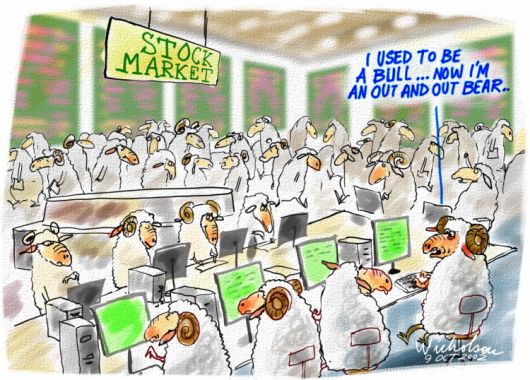
Stock Market Players: Bear, Bull or Sheep?

Starin' Through My Rearview ...

Thanks, Scotiabank! If it wasn't for Scotia I wouldn't be the same person that I am today. Also, because of Scotia I was able to do many things that otherwise would have been impossible (like this blog!)

I worked at Scotia from August 2004 to August 2005 as a Business Analyst in its Toronto Headquarters and it was such a rewarding experience. Put simply, Scotia put some cash in my pocket and made me a man.

But it's not all about the money. Looking back, not only did I get to experience the often-talked-about-in-school, "real world", but I met some very interesting people and made some wonderful friends.

Putting my money where my mouth is, is one of the most important things I was able to do after Scotia. I have been telling people that they should invest their money - and not just let it sit in the bank - for a long time now but never did it myself on a large scale.

Thanks to Scotia, I invested 75% of the money that I made there, and spent the rest :)

Today, my U.S. portfolio crossed somewhat of a landmark number - a return of over +30% since inception (15 months ago). In the same time period, the broad based S&P 500 was up around +13%.

Without the Scotiabank opportunity, all of this would have been impossible (or at least, delayed). Thanks again, Scotia!

Dangerous Minds

On April 28th, 2006, the shares of Labopharm shot up over 10% on more than average volume. Why did the shares go up? On April 27th, the shares closed at C$9.02 and on April 28th, the shares closed at C$9.99 - up over 10%. The reason for this is quite bizarre and shows how irrational the stock market really is.

Before the market opened on April 28th, the following news was released:

"Labopharm Inc. (TSX:DDS) today announced the public offering of 11,000,000 of its common shares at a price of US$8.00, representing an increase of 1,000,000 shares from the 10,000,000 shares originally proposed to be offered. The total net proceeds to the Company are expected to be approximately US$80,900,000 million."

Now, is this really good news? The company is issuing 11,000,000 common shares instead of the 10,000,000 common shares originally proposed. The 11,000,000 common shares represent 25% of the outstanding common shares of the company. This means that each common share after the offering is completed is worth 25% less than each common share before the offering (because whatever earnings the company earns has to be shared with 11,000,000 more common shares than before)!

I fail to understand why the shares went up 10% on the day the news was released. Maybe the market was happy that the company will have US$80,900,000 more in its pocket? Still, I can't believe the market is happy that their shares are worth less now. What are these people thinking? Dangerous minds are at work here!

Tags:

Vulture Culture

Vultures prey on the sick and dying. Similarly, if you want to make money in the stock market, you need to look for "sick" companies whose shares have fallen due to problems that are not likely to have a long-term impact. But, unlike vultures, it is best to leave "dying" companies alone (ex. Ford, GM)!

The concept of Mr. Market is what I call Vulture Culture. Mr. Market is a concept popularized by Benjamin Graham in his book, The Intelligent Investor.

Think of Mr. Market as someone who offers to sell you and buy from you the shares of many different companies at prices that depend on his mood. Sometimes the prices are outrageously high, sometimes he offers you the deal of a life time and yet other times the prices may seen reasonable.

The idea is that the intelligent investor will take advantage of Mr. Market's mood swings to make some profitable investments. For example, if Mr. Market has gone into depression and offers to sell you shares of good companies at rock-bottom prices, then it might be wise to make your purchases at that time. On the other hand, if Mr. Market is feeling extremely optimistic and offers to buy from you shares at a very high price, then it might be wise to sell those to him.

Maybe it should have been Miss Market rather than Mr. Market ...?

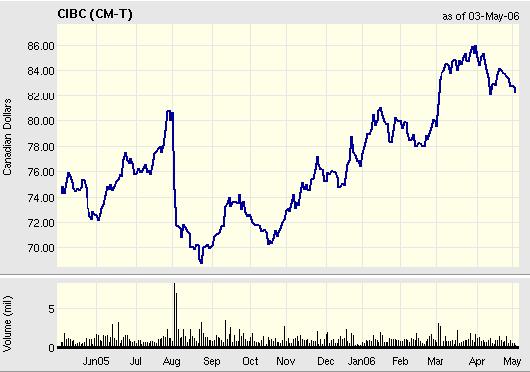
Mr. Market is not just a theoretical concept, but it works quite well in practice. For example, the shares of Canadian Imperial Bank of Commerce (CIBC) fell sharply in August 2005 after is was announced that CIBC struck a massive US$2.4 billion settlement with Enron investors. To put that in perspective, the bank earned C$2.1 billion for fiscal year 2004.

Yes, the settlement was massive, but did it mean that it was the end for CIBC? Absolutely not! As a matter of fact, it was a new beginning for CIBC since the ugly Enron chapter was now closed. Mr. Market had reacted strongly to the settlement and the shares fell from a high of over $80/share to a low of $68.56.

While the mutual funds and other "professional" investors were busy selling their shares and equity analysts downgrading the ratings for CIBC, I was able to buy the shares at $70. They are currently selling for over $82. Thanks for a great deal, Mr. Market!

Searching For Fortune?

If you're searching for fortune in the stock market, then don't listen to Warren Buffett! For those who do not know him, Warren Buffett is the CEO of Berkshire Hathaway. He is the second-richest man in the world (Forbes, 2005). Buffett has amassed enormous wealth by investing in the stock market.

Buffett can best be described by this statement: do as I say and not as I do.

It is no secret that in order to be successful in the stock market your strategy must be different than what the "street" is doing. It is also clear that if Buffett reveals his-stock picking strategies, every so-called investor out there would simply copy him and Buffett's investing returns will become mediocre, by default.

Buffett has hinted several times in his letters to the shareholders' on his strategy. Most people now believe that Buffett's strategy is to buy stocks that are trading below its intrinsic value (i.e. the discounted present value of future cash flows). Buffett admits that his strategy only works for a very small number of businesses that are stable and those that he can understand.

Buffett was a friend and the favourite student of Benjamin Graham. Graham is considered the father of "value investing" and is the author of The Intelligent Investor and Security Analysis. Graham stressed the importance of the past performance of a company (not the stock) in order to get an indication on its future.

Buffett's concept of intrinsic value, on the other hand, is to look at the future cash in-flows and out-flows generated by the company, discount those at an appropriate rate, and come up with the stock's present value. The present value of a stock is normally arrived at by looking at the cashflows for the next ten years.

Now, no matter how stable a company is, it is incredibly difficult to predict its cashflows for the next year, let alone for the next ten years! Even stable companies can show large variations in cashflows from one year to the next. Therefore, coming up with a company's intrinsic value based on its future cashflows alone does not sound very intelligent and it is not characteristic of Graham's teachings whom Buffett had a keen interest in.

I think Buffett is misleading the public with his "intrinsic value" concept. Buffett has never revealed how he calculates the intrinsic value but he claims to do it in his head in under a minute. Although it is not too difficult to calculate the intrinsic value, its dependability is highly questionable. How good are the cashflow numbers for eight, nine and ten years into the future? It is also interesting to note that the bulk of the intrinsic value is made up of the cashflow figures for the later years, than the earlier years.

Buffett will have an edge over everyone else as long as he does not reveal his stock-picking strategies and the best way to maintain that edge is to send the "sheep" on a wild goose chase!

 
Add to Technorati Favorites